Electric Commercial Vehicles: Efficient, Silent, Scalable
EV commercial vehicles reduce running costs. Electricity costs less than diesel. Fewer moving parts mean less maintenance. For last-mile delivery, EVs excel. Urban areas favour zero-emission vehicles.
Charging stations increase steadily. Yet, range anxiety persists. Heavy loads strain battery life. Still, daily city routes suit electric trucks well. Government incentives reduce purchase cost. Many fleets now adopt electric LCVs for short-range transport.
CNG Commercial Vehicles: Balanced, Practical, Low-Emission
CNG vehicles burn cleaner than diesel. Emissions remain low. Running costs stay competitive. Urban use cases favour CNG trucks. In Delhi, Mumbai, Ahmedabad—CNG refueling points are common.
CNG trucks deliver decent mileage. They carry moderate loads efficiently. Refueling time is quick. But storage tanks take space. Payload suffers slightly. Outside metros, CNG access thins out. For regional use, CNG remains strong.
Diesel Commercial Vehicles: Powerful, Durable, Proven
Diesel remains dominant for long hauls. Trucks powered by diesel carry heavy loads. They travel across states, across terrains. Refueling takes minutes. Pumps are everywhere.
However, pollution regulations tighten. Urban restrictions increase. Diesel prices rise. Maintenance costs remain high. Despite these, diesel suits bulk cargo. For hills, highways, rugged zones—diesel trucks outperform.
What Makes Business Sense in 2025?
Each fuel type serves a niche.
- Choose EVs: When trips stay within 100 km. Fleets operating in cities benefit. Savings grow over time.
- Choose CNG: When routes stay urban or semi-urban. Stations exist, payload needs to stay moderate.
- Choose Diesel: When power matters. When trips stretch across states. When loads stay heavy.
Conclusion
The best commercial vehicle in 2025 depends not on hype, but on route length, load pattern, fuel access, and budget.
Fleet managers must assess total cost of ownership, not just fuel price. In the evolving transport landscape, clarity matters more than trends.
FAQs
1. Which fuel type is cheapest to run?
Electric vehicles cost the least per kilometre in 2025.
2. Is CNG better than diesel for cities?
Yes. CNG is cleaner and cheaper for short city routes.
3. What limits EV trucks in India?
Range, charging speed, and limited infrastructure outside cities.
4. When should I choose diesel?
For long routes, heavy loads, or tough terrain—choose diesel.
Read More
Web Stories
Latest commercial-vehicle News
 Amazon Partners With Eicher Trucks for EV Delivery Expansion in IndiaAmazon India is expanding its fast delivery service through Amazon Now by adding 1000 electric trucks as part of their logistics network. These trucks will be supplied by VE Commercial Vehicles and its subsidiary Eicher Trucks & Buses and will be...4 min readIG
By Indraroop
Thu May 21 2026
 Ashok Leyland Launches Twin Fuel DOST and DOST+ XL in IndiaAshok Leyland has launched two new Light Commercial Vehicles (LCV)- the Twin Fuel DOST and DOST+ XL- which have produced a practical and environmentally-friendly way of last-mile delivery. The launch took place on April 16, 2026, in New Delhi, as par...3 min readIG
By Indraroop
Thu Apr 16 2026
 Tata Motors Lucknow Plant Crosses 10 Lakh Commercial Vehicles MilestoneThe Tata Motors Ltd.'s manufacturing plant located in Lucknow has produced a total of 10th lakh commercial vehicles over the last thirty years and recently celebrated this achievement with a ceremony that was attended by representatives from the Gove...4 min readIG
By Indraroop
Wed Apr 15 2026
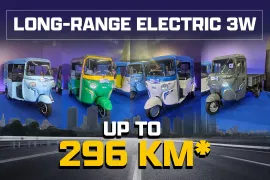 Bajaj Launches WEGO Electric 3-Wheeler Range with Up to 296 km RangeBajaj Auto has released a brand new range of electric three-wheelers called WEGO. According to Bajaj, the company has one of the largest selections of EV three-wheelers in India, with varieties catering to both passenger and freight uses. Five separa...3 min readIG
By Indraroop
Tue Apr 14 2026
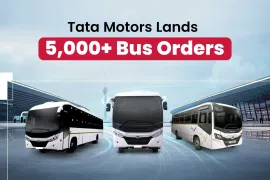 Tata Motors Bags Orders for More Than 5,000 Buses from State Transport UndertakingsTata Motors has received an order from several state transport undertakings (STUs) across India to deliver more than 5,000 buses and/or bus chassis. The order includes transport corporations located in the states of Maharashtra, Gujarat, North Wester...3 min readIG
By Indraroop
Mon Mar 16 2026
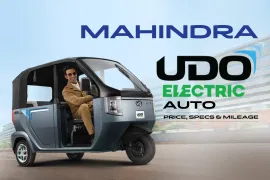 Mahindra UDO Electric Auto Price Rs. 3.59 Lakh – Specs and MileageMahindra UDO, an Electric Three-Wheeler, has been officially launched in India, with an introductory price tag of Rs. 3.58-3.59 lakhs. This new model joins the highly evolving and dynamic space of last-mile mobility with a singular focus on range, co...3 min readIG
By Indraroop
Fri Feb 13 2026
 Mahindra LMML Launches Udo Electric Three-Wheeler, a Step Towards Increased Urban EV AdoptionMahindra Last Mile Mobility Limited (LMML), has launched an electric three-wheeler named Udo under the urban passenger mobility segment. It is reported that the company has added a new model to its electric portfolio, for urban-based transport operat...3 min readIG
By Indraroop
Thu Feb 12 2026
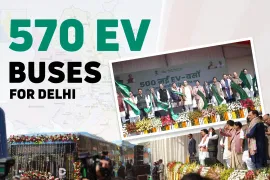 GreenCell Mobility Plans Deployment of 570 Electric Buses to Expand Delhi’s Public Transport NetworkDelhi has been expanding its clean mobility space as 570 electric buses are being readied to be deployed across Delhi in the next few months by GreenCell Mobility. This move complements Delhi’s efforts in enhancing its zero-emission public transporta...4 min readIG
By Indraroop
Mon Feb 09 2026
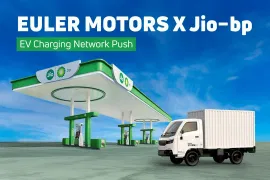 Euler Motors, Jio-bp Join Hands to Boost EV Charging Network for Commercial FleetsA Memorandum of Understanding between Euler Motors, a major automotive original equipment manufacturer, and Jio-bp, a traditional energy player, has been signed, which should have a major impact on the charging infrastructure for EVs used in commerc...3 min readIG
By Indraroop
Mon Feb 09 2026
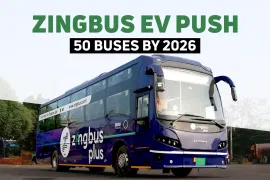 Zingbus Expands EV Push with 50 Electric Buses Planned for 2026, Eyes 1,000 by 2030Zingbus, the India-based intercity travel platform, has announced a strategic expansion of its electric bus rollout, planning to deploy 50 new electric buses in 2026 as part of a broader mobilisation towards cleaner, long-distance travel. This initia...4 min readIG
By Indraroop
Fri Feb 06 2026