- +9 Images
- +3 Videos
Tata Ace EV
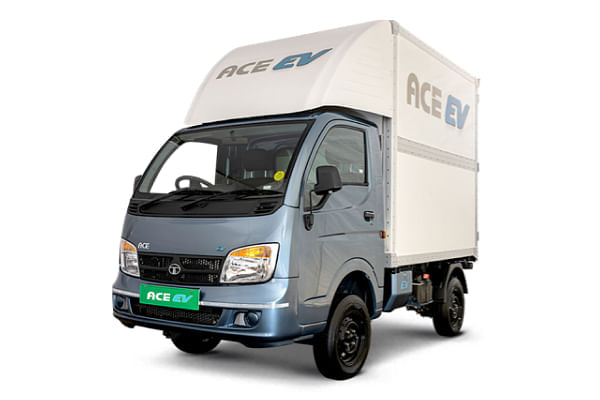
Tata Ace EV is available in the India market with an ex-showroom price of ₹10.51 Lakh. Tata Ace EV comes with Electric,36 HP,130 Nm,1840 Kg,600 Kg,154 kms,21.3 kWh.
₹10.51 Lakh*
View Price Breakup
EMI starts @
₹19,633/Month*
Ex-showroom price in
• Prices have been reduced after GST 2.0 and will be updated on the website shortly

EMI starts @
₹19,633/Month*
Tata Ace EV - Pick Up Truck Price & Specs
The Tata Ace EV did not enter the market as a concept vehicle. It entered straight into work. Milk routes, e commerce loops, campus movement, municipal supply. Places where routes repeat and time matters more than speed. People were sceptical at first, obviously. But once it started running daily without noise or fuel stops, attitudes changed. That usually happens only when something fits real work.
Performance & Motor
The Ace EV is powered by an electric motor with a 27 kW rating producing 130 Nm of torque; this torque is available immediately (no build up or revs). In terms of load, that is far more important than high-speed capabilities. There is no traditional gearbox, only a single-speed reduction drive producing a direct drive experience. Most drivers forget about gear changes 24 hours after driving their first trip.
Durability & Maintenance
This truck removes a lot of things operators are used to worrying about. No clutch. No engine oil. No injectors. No exhaust system. What remains is suspension, brakes, tyres, and electronics. Servicing becomes more planned and less reactive. The battery and motor are sealed units, designed for commercial cycles, not private car usage. Workshops approach it differently, but once the routine settles, downtime usually reduces.
Energy Use & Emissions
The battery has a capacity of 21.3 kWh, using Lithium Iron Phosphate chemistry for its stability and long term durability. The certified driving range is 154 km, but the actual driving range will depend on load and driving style. The battery can be charged via 7.4 kW AC (approximately 6 to 7 hours) or via 50 kW DC Fast Charge (approximately 90 minutes to 80% charged). There are no tailpipe emissions, which completely changes where the vehicle can, and will operate.
Capacity & Comfort
Payload capacity is 710 kg, which keeps it aligned with diesel mini trucks and avoids operational compromises. The GVW is 1840 kg, so load planning remains familiar. The cargo deck is flat and usable, nothing experimental there. Inside the cabin, the big change is not design but silence. No vibration. No engine heat. On long city shifts, drivers notice that difference before anyone else does.
Competitors
Electric mini trucks are still early in India. A few alternatives exist, but many focus on claims rather than long term support. Operators tend to look beyond range numbers and ask simpler questions. Can it run daily. Can it charge reliably. Can it be serviced without drama. That is where familiarity and network strength start mattering more than spec sheets.
Why Operators Choose Tata Ace EV
Most operators choose this truck after doing the math, not after reading brochures. Fixed routes make charging predictable. Electricity costs stay stable. Drivers prefer the smoother experience. Maintenance planning becomes simpler. And in the cities where emissions rules are strict, zero tailpipe emissions stop being a feature and start being a requirement. Over time, the Tata Ace EV stops feeling like an electric vehicle and starts feeling like just another work truck.