Monsoons bring chaos and unpredictability. Rainstorms, slippery roads, potholes, and blockages make it not the most convenient time for commercial vehicles. During this period, drivers are tested immensely on their patience, grit, and ability to navigate these challenging times. However, just as a driver’s skills are important, so is the condition of their vehicle.
Tips To Maintain Trucks During The Monsoon Season
Heavy logistical vehicles like trucks must be in top-notch condition to face the unexpected wrath of nature. However, not everything is in the driver’s hands; to withstand the outer circumstances, it is important to take all the necessary steps to prepare the truck for the monsoon. Let’s discuss some important tips for maintaining trucks during the monsoon season.
- Inspect the electrical system
One of the most common problems during the monsoon is faults in the electrical system and wiring harness. You must make sure that water has not entered the electrical system or equipment, like lights, indicators, etc. Water entering these systems can cause major failures and hazards, even leading to fire.
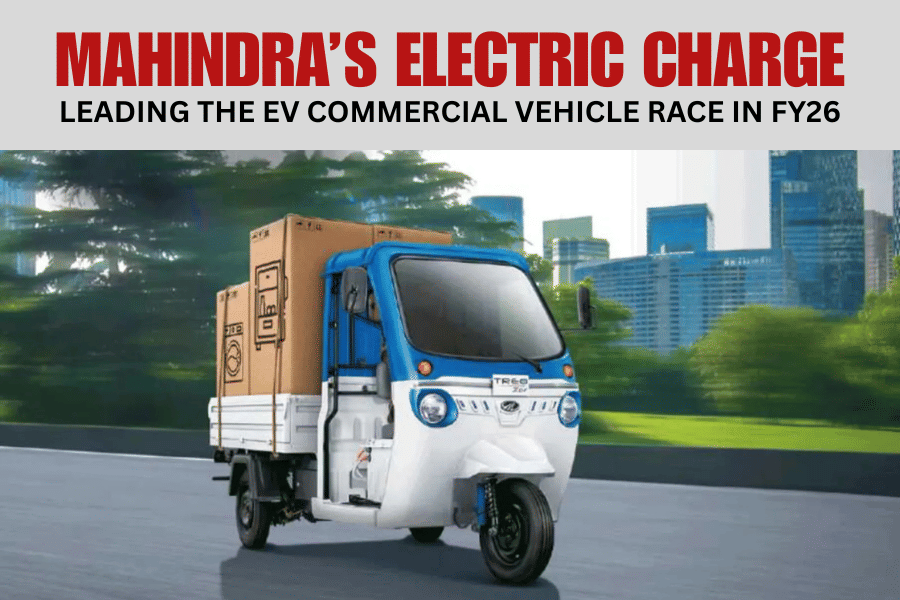
You should do this for traditional vehicles as well as EVS. For example, if you have a Mahindra E Rickshaw, you need to make sure that the charging area is protected from the rain and that no water has entered the vehicle. Sometimes, such faults are not easily detectable, so make sure you take preventive maintenance measures to avoid burning your pocket later.
- Inspect the cooling system
During the monsoon, rains are not the only concern. The humidity level also increases severely, causing damage to the vehicle systems. This increasing humidity takes a toll on the vehicle's cooling system. To avoid disruption in your cooling system or overheating, make sure to refill the coolant reservoir so that it is up and running for the monsoon season.
Apart from the cooling system, one must avoid humidity in any critical part of the vehicle. Maintenance during and especially before the monsoon is essential, even for the top models of the latest brands, whether you have an EV truck or a Mahindra Bolero pickup truck.
- Inspect/replace the tyres
Monsoons are intense in India. Constant pouring and lightning lead to waterlogging, potholes, broken bridges, fallen trees, and the list goes on. It is not the easiest terrain to navigate, and breakdowns and hazards become common. So, how do you deal with these tough times? You create a strong foundation and make sure one of the most important parts of your vehicle is running smoothly and strong–the tyres.
Tyre maintenance can differ from vehicle to vehicle. The needs for a Mahindra mini truck may be different from those of a Tata pickup. What is important is that you inspect the tyres before going on the road to avoid any chances of hydroplaning or tyre bursts. You can also check the tread depth of the tyre with a coin to be double sure. Regular checks for wear and tear can prevent safety hazards.
- Get the defogging system in place
Another impact of the monsoon is the disruption in visibility. Rains make the road foggy, which is a major hassle for drivers. To avoid this, firstly, make sure that the windshield is strong and not creaky. Second, inspect and test the defogging system before hitting the road. Most importantly, make sure that the wiper blades are up to the mark.
Wiper blades are very important for improving visibility. You must regularly check the wiper blades and, if necessary, change them, especially before the monsoon starts. Also, refill the washer fluids and use products that enhance visibility during the monsoon and prevent fogginess.
- Other important checks & tips for trucks
After you use the four important tips mentioned above, you must also look at these other checks that are required for a truck or commercial vehicle to be monsoon-ready.
- Break Checks: Breaks can become wobbly during the rainy season. Inspect the brake pads, discs, and fluid and replace them whenever necessary.
- Lights: Make sure the headlights, tail lights, and other lights, if any, are working properly. They might be used a lot more during monsoons to improve visibility.
- Anti-Rust Coating: Water causes rusting, and during the monsoon season, the vehicle's metal parts are more prone to rusting.
- Teflon Coating: This is optional, but you can consider teflon coating to protect the truck’s exterior parts from dirt and water.
Apart from the above-mentioned maintenance and check guidelines, it is also important to follow some general maintenance rules. For example, wash your vehicle regularly, or maybe more often, because trucks can easily get dirty in the rain and accumulate dust and mud. Also, regularly check for leaks and get them fixed as soon as possible. To maintain smooth operations, appropriately lubricate all the parts from time to time.
These guidelines are for vehicle maintenance. As a driver, you should drive the vehicle at a reduced speed and follow all the safety rules. It is advisable to maintain some distance from other vehicles, especially on days of heavy downpour. If things get hard and unexpected delays take place, try to practice patience and keep your cool.
Conclusion:
If you are a truck driver who wants to maintain your vehicle and keep it in its ideal condition during the rainy season, you must run an inspection of the electrical system, the cooling system and the defogging system. Further, inspect and replace the tyres, all the important fluids and any other parts of the vehicle that are worn out. Also, other general maintenance like brake checks, anti-rusting, and regular washing of the vehicle must be followed. If you follow these tips, along with proper driving and safety tips, you can better navigate the roads during the rainy season and ensure the safety of your vehicle, yourself, the passengers and the safety of the people on the road.
Web Stories
Latest Trucks News
 Tata Ace Turns 21; Tata Motors Launches Ace Gold+ XL for Last-Mile LogisticsTata Motors has marked 21 years of its small commercial vehicle, the Tata Ace, with the launch of the new Ace Gold+ XL. The model arrives as an extension of the existing Ace range, aimed at improving load capacity and efficiency in last-mile transpor...3 min readIG
By Indraroop
Wed May 06 2026
 Ashok Leyland Launches Twin Fuel DOST and DOST+ XL in IndiaAshok Leyland has launched two new Light Commercial Vehicles (LCV)- the Twin Fuel DOST and DOST+ XL- which have produced a practical and environmentally-friendly way of last-mile delivery. The launch took place on April 16, 2026, in New Delhi, as par...3 min readIG
By Indraroop
Thu Apr 16 2026
 Mahindra Trucks and Buses Accelerates Growth, Logs 40% Sales Rise in JanuaryIn January, Mahindra and Mahindra’s Trucks & Buses Division showed a 40% increase in sales over the previous year, selling a cumulative total of 3,065 commercial vehicles. This is a positive sign for the commercial vehicle market in India, which...4 min readIG
By Indraroop
Wed Feb 04 2026
 Budget 2026–27 Could Deliver Major Boost to Trucks, Commercial VehiclesThe Union Budget for 2026-27 India focuses on infrastructure development, which is expected to generate long-term momentum for the trucks and commercial vehicles sector. The increase in public sector capex indicates the government's focus on improvin...4 min readIG
By Indraroop
Mon Feb 02 2026
 Ashok Leyland Introduces Taurus and Hippo Heavy-Duty Trucks in IndiaAfter more than half a century of silence, two of the most recognizable names in India’s heavy trucking story are coming back. Ashok Leyland is set to launch the Taurus and Hippo trucks, not as nostalgic throwbacks, but as fully re-engineered, modern...3 min readPV
By Pratham
Thu Jan 22 2026
 Mahindra Unveils New Bolero Camper and Pik-Up Range with Fresh Design, Features and Comfort FeaturesBeing a prominent manufacturer of commercial vehicles in the Indian automotive industry, Mahindra & Mahindra Ltd. has introduced new variants of both the Bolero Camper model and the Bolero Pik-Up model of the Bolero series of utility vehicles, wh...3 min readIG
By Indraroop
Thu Jan 22 2026
 Tata Motors Launches Updated Ultra Truck Line-up with EV and Diesel OptionsThe Ultra name has always lived in a slightly different space. Not flashy like heavy trucks, not barebones either. It’s the range that quietly handles city runs, hub-to-hub movement, and the middle ground between last-mile and long haul.With today’s...4 min readPV
By Pratham
Tue Jan 20 2026
 Tata Motors Expands the Prima Lineup With a Mix of Electric and Diesel Heavy TrucksTata Motors has launched new trucks in their existing Prima lineup. With the latest additions to the Prima range, Tata Motors has made it clear that it isn’t betting on a single path for heavy trucking. Instead, the company has widened the Prima port...3 min readPV
By Pratham
Tue Jan 20 2026
 Tata Motors Launches New Signa Trucks at Bharat Mandapam Truck launches are usually loud affairs, big claims, bigger screens and a lot of words that don’t mean much once you leave the hall. Today’s Signa launch at Bharat Mandapam felt different and just more confident.Tata Motors introduced six new Signa m...5 min readPV
By Pratham
Tue Jan 20 2026
 Tata Motors Introduces the Azura Series With Three New TrucksWith the introduction of the Azura series, Tata Motors has quietly reshaped its approach to the light and intermediate truck space. Instead of trying to stretch one product across multiple payload classes, the company has rolled out three separate mo...3 min readPV
By Pratham
Tue Jan 20 2026