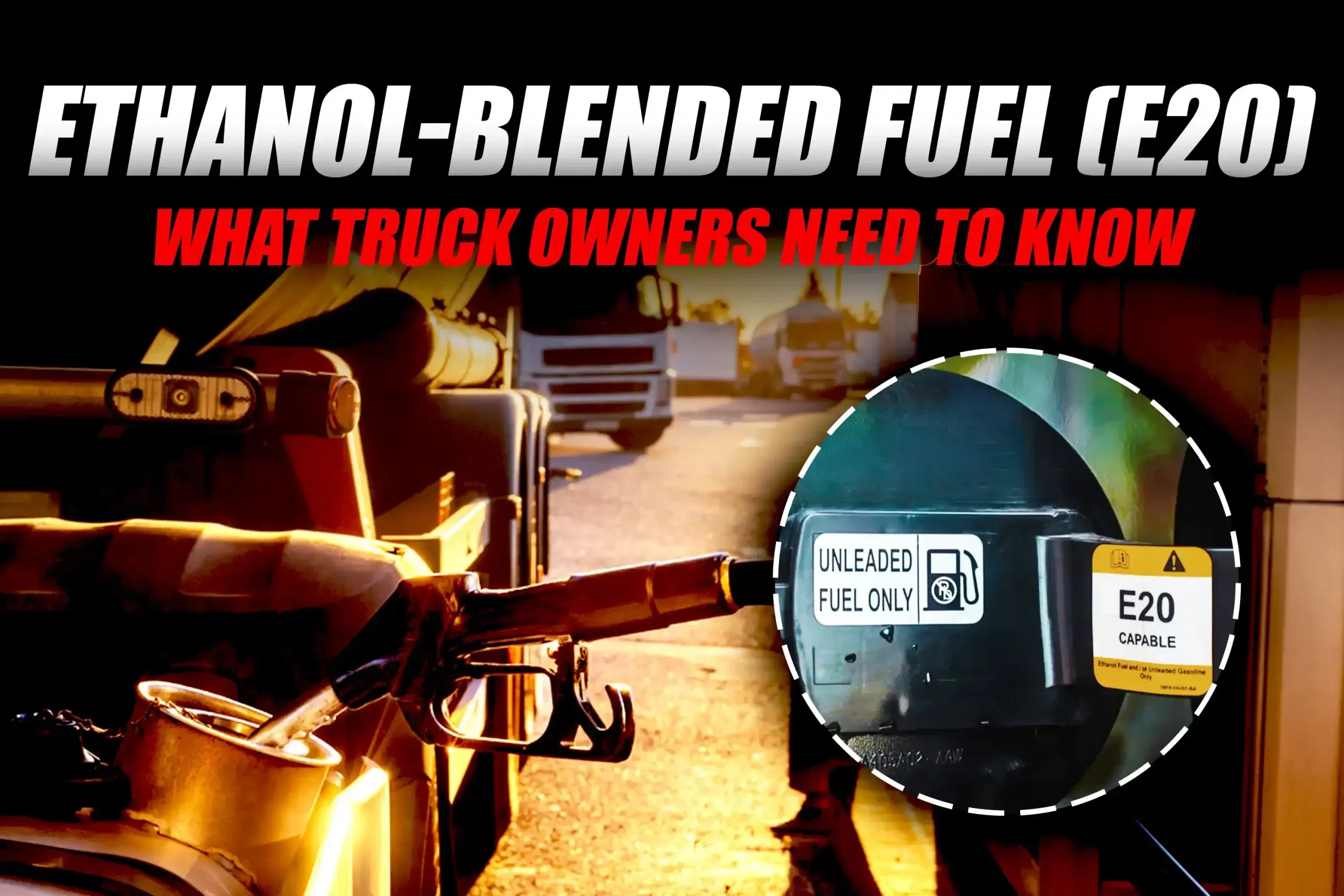
There is a change in the fuel used in India's transportation industry. The government is presently promoting ethanol-blended fuel, with E20, which is 20% ethanol and 80% petrol, being the main focus. This policy has effects on people who own trucks. It changes how engines work, the cost of fuel, and the long-term planning of fleets.
What is fuel that has ethanol in it?
Ethanol is a fuel that can be used again. It comes from sugarcane, maize, and crops that are no longer useful. Refineries take crops out of the ground, and filling stations blend ethanol with gas. When trucks use this blend, their engines release less harmful gases, and the country saves money on oil.
- E10 is a mix of 10% ethanol and 90% gasoline.
- E20 is made up of 20% ethanol and 80% gasoline.
India already sells E10 in a lot of places. E20 will soon be available all throughout the country. This means that trucks need fuel with distinct qualities. Because ethanol has less energy per liter than gasoline, the mileage changes. It also burns cleaner, which makes upkeep easier.
Why India Wants E20
The government's choice connects fuel to the economy, farming, and the environment. There are four clear reasons:
- Cut down on oil imports: India gets more than 80% of its crude oil from other countries. Ethanol takes the place of gasoline, which makes things easier.
- Support farmers: Ethanol processing uses crops, which is good for farmers. Exigency makes the market for sugarcane and cereals steady, which is good for farmers.
- Improve air quality: Ethanol burns with less pollution, which lowers the amount of carbon monoxide and particulate matter in cities.
- Set global standards: Brazil and the US currently use high mixes of ethanol. India follows this rule that is used around the world.
So, E20 is more than just a cleaner gasoline. It is also a step toward protecting the environment, making farmers more money, and making electricity safer.
Benefits of Ethanol Fuel for Truck Owners
Most people who drive trucks are skeptical of new fuels. But there are good reasons to use ethanol-blended fuel:
- Cleaner engines: Ethanol reduces carbon deposits in combustion, which makes engines cleaner. Engines that are cleaner cost less to maintain and last longer.
- Emission compliance: E20-powered vehicles are better for the environment, satisfy stricter regulations, and keep fleets in compliance.
- Balance of fuel costs: Ethanol is usually less expensive than gasoline. Wider blending could help keep fuel prices stable in the future.
- Business credibility: A lot of organizations now care about being sustainable. Fleets that use E20 gasoline trucks may get contracts that prefer eco-friendly transportation.
For owners and operators, these benefits make daily operations more valuable in the long run.
Effect on Truck Fuel Efficiency
The most practical thing for truck drivers to think about is fuel efficiency. Petrol has more energy than ethanol. This has an effect on performance.
- Studies show that trucks could lose 6–8% of their fuel economy when they switch from E10 to E20.
- Newer engines built for E20 have more efficient combustion systems that make this difference less noticeable.
- The actual results depend on the load, the road conditions, and the make of the truck.
The drop in mileage is real, but it's not a big deal. The difference in operational costs can be made up for by cleaner burning, fewer maintenance, and a steady supply of fuel.
Availability of E20 Fuel in India
The rollout of E20 will depend on the supply chain. The government has announced a planned rollout:
- In most cities and semi-urban areas, E20 fuel will be available at gas stations by 2025.
- Next will come rural and highway corridors, which will grow in small steps.
- At first, both E10 and E20 will be there. People who own vehicles need to make sure that their trucks can run on the right mix.
Route planning is important for vehicles that travel long distances. Drivers need to make sure that the gas stations along the way have E20.
Problems for Truck Owners
The switch to E20 is a wonderful thing, however it comes with several problems:
- Engine capability: Older trucks that aren't ethanol-friendly may rust, break seals, or wear out faster.
- Mileage drop: You need to keep an eye on a small but noticeable drop in fuel economy.
- Risks of storage: Ethanol soaks up water. Fuel quality can go down if it is not stored properly.
- Supply that isn't the same: At first, some areas may not offer E20, which makes it hard for fleets to get it.
Getting ready for these dangers makes truck owners more prepared.
How to Get Ready for Truck Owners
To switch to ethanol, you need to be proactive. Before problems happen, owners need to do something.
- Talk to the manufacturers: Most truck makers these days make engines that work with E20. Before making the adjustment, owners need to check the terms of the warranty.
- Maintain regularly: Regular maintenance is important since ethanol mixtures can damage rubber parts, injectors, and filters. Regular checks cut down on breakdowns.
- Plan routes: Plan your trips such that E20 is available at highway stops and gas stations. Don't let shortages catch you off guard.
- Be careful while you track: After E20 runs, keep an eye on the mileage, load efficiency, and maintenance. It helps figure out what the real effect is.
Getting ready gives you confidence. It also helps trucks keep running smoothly during the change.
What India Needs to Do with Ethanol
E20 is more than just a change in technology. This is what India plans to do in the future. It's clear that there are short-term problems, such somewhat lower mileage, an unreliable fuel source, and having to adapt. But the long-term benefits are much greater than these problems.
- Less oil is imported, which saves money for the country.
- Farmers make money on a regular basis because of the demand for ethanol.
- Cities have better air quality and fewer emissions.
- Fleets look and feel like they will last and move forward.
Trucks that operate on ethanol will not only move goods, but they will also help the country grow and make transportation more environmentally friendly.
Final Thoughts
The time for fuel that is mixed with ethanol is coming soon. Soon, trucks that use E20 fuel will be common on Indian roadways. For people who own commercial vehicles, the call is one of preparation: making sure the engine is right, keeping an eye on fuel efficiency, and changing how the truck works to use the new E20 fuel. Some people might be worried about the mileage effect, but the benefits of ethanol fuel, clean engines, lower emissions, stable costs, and a better business image, make E20 a step ahead. India's transportation industry won't have any problems with this change. It is a step toward a future that is cleaner, safer, and more sustainable.
Read more:
Web Stories
Latest Trucks News
 Tata Ace Turns 21; Tata Motors Launches Ace Gold+ XL for Last-Mile LogisticsTata Motors has marked 21 years of its small commercial vehicle, the Tata Ace, with the launch of the new Ace Gold+ XL. The model arrives as an extension of the existing Ace range, aimed at improving load capacity and efficiency in last-mile transpor...3 min readIG
By Indraroop
Wed May 06 2026
 Ashok Leyland Launches Twin Fuel DOST and DOST+ XL in IndiaAshok Leyland has launched two new Light Commercial Vehicles (LCV)- the Twin Fuel DOST and DOST+ XL- which have produced a practical and environmentally-friendly way of last-mile delivery. The launch took place on April 16, 2026, in New Delhi, as par...3 min readIG
By Indraroop
Thu Apr 16 2026
 Mahindra Trucks and Buses Accelerates Growth, Logs 40% Sales Rise in JanuaryIn January, Mahindra and Mahindra’s Trucks & Buses Division showed a 40% increase in sales over the previous year, selling a cumulative total of 3,065 commercial vehicles. This is a positive sign for the commercial vehicle market in India, which...4 min readIG
By Indraroop
Wed Feb 04 2026
 Budget 2026–27 Could Deliver Major Boost to Trucks, Commercial VehiclesThe Union Budget for 2026-27 India focuses on infrastructure development, which is expected to generate long-term momentum for the trucks and commercial vehicles sector. The increase in public sector capex indicates the government's focus on improvin...4 min readIG
By Indraroop
Mon Feb 02 2026
 Ashok Leyland Introduces Taurus and Hippo Heavy-Duty Trucks in IndiaAfter more than half a century of silence, two of the most recognizable names in India’s heavy trucking story are coming back. Ashok Leyland is set to launch the Taurus and Hippo trucks, not as nostalgic throwbacks, but as fully re-engineered, modern...3 min readPV
By Pratham
Thu Jan 22 2026
 Mahindra Unveils New Bolero Camper and Pik-Up Range with Fresh Design, Features and Comfort FeaturesBeing a prominent manufacturer of commercial vehicles in the Indian automotive industry, Mahindra & Mahindra Ltd. has introduced new variants of both the Bolero Camper model and the Bolero Pik-Up model of the Bolero series of utility vehicles, wh...3 min readIG
By Indraroop
Thu Jan 22 2026
 Tata Motors Launches Updated Ultra Truck Line-up with EV and Diesel OptionsThe Ultra name has always lived in a slightly different space. Not flashy like heavy trucks, not barebones either. It’s the range that quietly handles city runs, hub-to-hub movement, and the middle ground between last-mile and long haul.With today’s...4 min readPV
By Pratham
Tue Jan 20 2026
 Tata Motors Expands the Prima Lineup With a Mix of Electric and Diesel Heavy TrucksTata Motors has launched new trucks in their existing Prima lineup. With the latest additions to the Prima range, Tata Motors has made it clear that it isn’t betting on a single path for heavy trucking. Instead, the company has widened the Prima port...3 min readPV
By Pratham
Tue Jan 20 2026
 Tata Motors Launches New Signa Trucks at Bharat Mandapam Truck launches are usually loud affairs, big claims, bigger screens and a lot of words that don’t mean much once you leave the hall. Today’s Signa launch at Bharat Mandapam felt different and just more confident.Tata Motors introduced six new Signa m...5 min readPV
By Pratham
Tue Jan 20 2026
 Tata Motors Introduces the Azura Series With Three New TrucksWith the introduction of the Azura series, Tata Motors has quietly reshaped its approach to the light and intermediate truck space. Instead of trying to stretch one product across multiple payload classes, the company has rolled out three separate mo...3 min readPV
By Pratham
Tue Jan 20 2026