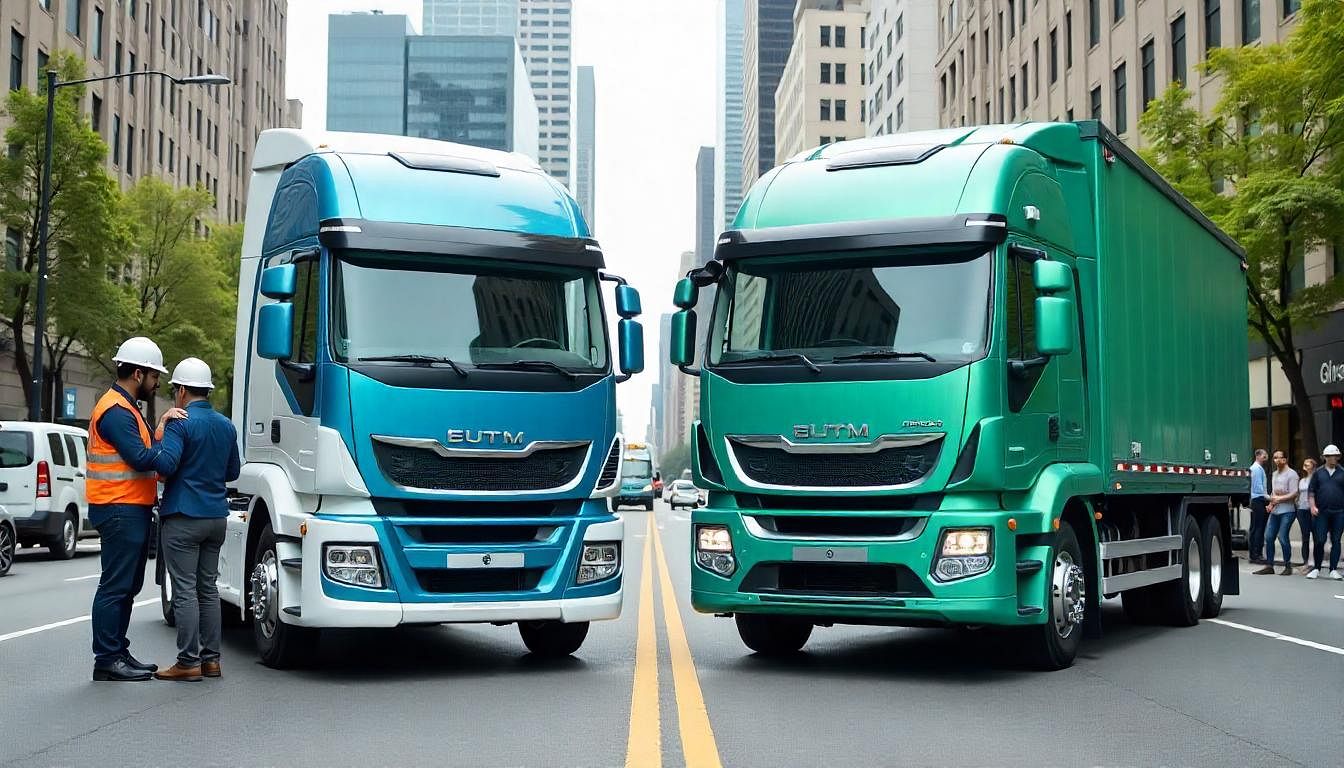
The commercial trucking industry is undergoing a transformative shift as businesses and governments worldwide push for greener alternatives to diesel-powered vehicles. Two leading technologies—electric and hydrogen-powered trucks—are emerging as frontrunners in the race to decarbonize freight transportation. While both offer significant environmental benefits, they differ in terms of technology, infrastructure, and operational feasibility. This article explores the pros, cons, and key differences between electric and hydrogen commercial trucks, with a focus on their applicability in the trucking industry.
Electric Commercial Trucks
Pros:
- Zero Emissions: Electric trucks produce no tailpipe emissions, making them ideal for reducing urban air pollution.
- Lower Operating Costs: Electricity is generally cheaper than diesel or hydrogen, leading to lower fuel costs over the vehicle’s lifetime.
- Proven Technology: Electric vehicles (EVs) have been widely adopted in passenger cars, and the technology is now being scaled up for commercial trucks.
- Quieter Operations: Electric trucks are significantly quieter than diesel trucks, reducing noise pollution in urban areas.
- Government Incentives: Many governments offer subsidies and tax benefits for electric vehicle adoption, making them more affordable.
Cons:
- Limited Range: Most electric trucks have a range of 150-300 miles on a single charge, which may not be sufficient for long-haul operations.
- Charging Time: Charging an electric truck can take several hours, leading to downtime for fleets.
- Battery Weight: The heavy weight of batteries can reduce the payload capacity of electric trucks.
- Charging Infrastructure: While growing, the charging infrastructure for electric trucks is still underdeveloped in many regions.
Hydrogen Commercial Trucks
Pros:
- Longer Range: Hydrogen trucks can travel up to 400-600 miles on a single tank, making them better suited for long-haul routes.
- Fast Refueling: Refueling a hydrogen truck takes about 10-15 minutes, comparable to diesel trucks.
- Zero Emissions: Like electric trucks, hydrogen trucks emit only water vapor, making them environmentally friendly.
- Lightweight: Hydrogen fuel cells are lighter than batteries, allowing for greater payload capacity.
Cons:
- High Costs: Hydrogen fuel is currently more expensive than electricity or diesel, and the trucks themselves are costly to produce.
- Limited Infrastructure: Hydrogen refueling stations are scarce, limiting the operational feasibility of hydrogen trucks.
- Energy-Intensive Production: Most hydrogen is produced using fossil fuels, which undermines its environmental benefits unless green hydrogen (produced using renewable energy) is used.
- Storage Challenges: Hydrogen is highly flammable and requires specialized storage and handling.
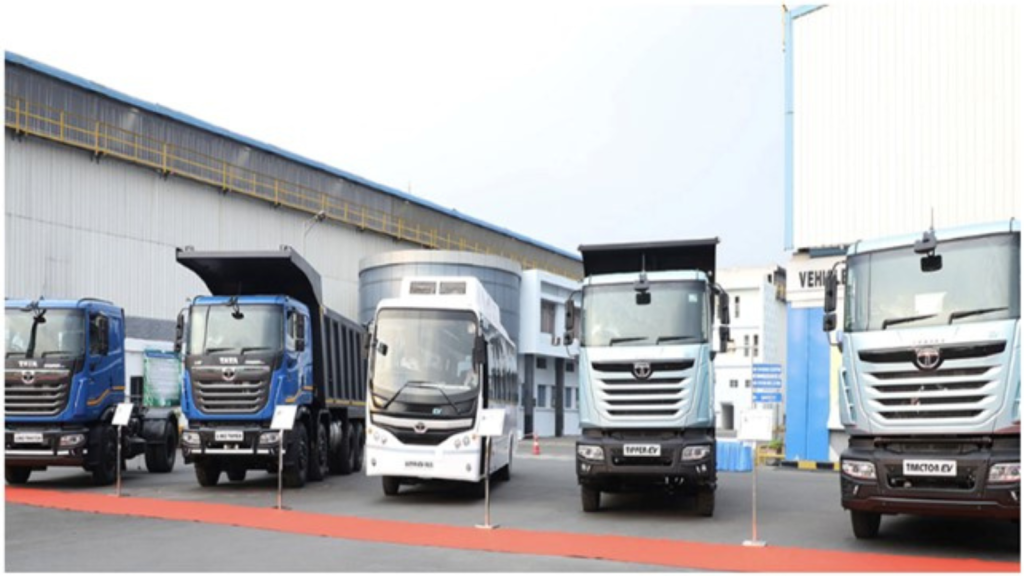
Key Differences Between Electric and Hydrogen Trucks
- Energy Source: Electric trucks rely on batteries charged with electricity, while hydrogen trucks use fuel cells that convert hydrogen into electricity.
- Range and Refueling: Hydrogen trucks offer longer ranges and faster refueling times, making them more suitable for long-haul operations. Electric trucks, on the other hand, are better suited for short- to medium-haul routes.
- Infrastructure: Electric charging infrastructure is more widespread than hydrogen refueling stations, but both are still in the early stages of development for commercial trucks.
- Cost: Electric trucks are generally cheaper to operate and maintain, while hydrogen trucks have higher upfront and operational costs.
Statistics on Commercial Trucks (2024-2025)
- Electric Trucks: The global electric truck market is projected to grow at a CAGR of 35% from 2024 to 2025, with sales expected to reach 200,000 units by 2025.
- Hydrogen Trucks: The hydrogen truck market is anticipated to grow at a CAGR of 40% during the same period, with sales projected to hit 10,000 units by 2025.
- Market Share: Electric trucks are expected to dominate the short- and medium-haul segments, while hydrogen trucks will gain traction in long-haul and heavy-duty applications.
- Infrastructure: By 2025, the number of electric charging stations for trucks is expected to double, while hydrogen refueling stations will see a 50% increase globally.
Conclusion
As the commercial trucking industry transitions to cleaner technologies, platforms like 91trucks are playing a pivotal role in facilitating this shift. 91Trucks, a leading digital marketplace for commercial vehicles, is helping fleet operators make informed decisions by providing access to a wide range of electric and hydrogen trucks.
Web Stories
Latest Trucks News
 Tata Ace Turns 21; Tata Motors Launches Ace Gold+ XL for Last-Mile LogisticsTata Motors has marked 21 years of its small commercial vehicle, the Tata Ace, with the launch of the new Ace Gold+ XL. The model arrives as an extension of the existing Ace range, aimed at improving load capacity and efficiency in last-mile transpor...3 min readIG
By Indraroop
Wed May 06 2026
 Ashok Leyland Launches Twin Fuel DOST and DOST+ XL in IndiaAshok Leyland has launched two new Light Commercial Vehicles (LCV)- the Twin Fuel DOST and DOST+ XL- which have produced a practical and environmentally-friendly way of last-mile delivery. The launch took place on April 16, 2026, in New Delhi, as par...3 min readIG
By Indraroop
Thu Apr 16 2026
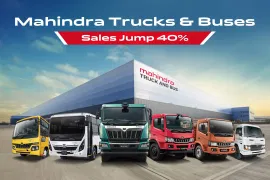 Mahindra Trucks and Buses Accelerates Growth, Logs 40% Sales Rise in JanuaryIn January, Mahindra and Mahindra’s Trucks & Buses Division showed a 40% increase in sales over the previous year, selling a cumulative total of 3,065 commercial vehicles. This is a positive sign for the commercial vehicle market in India, which...4 min readIG
By Indraroop
Wed Feb 04 2026
 Budget 2026–27 Could Deliver Major Boost to Trucks, Commercial VehiclesThe Union Budget for 2026-27 India focuses on infrastructure development, which is expected to generate long-term momentum for the trucks and commercial vehicles sector. The increase in public sector capex indicates the government's focus on improvin...4 min readIG
By Indraroop
Mon Feb 02 2026
 Ashok Leyland Introduces Taurus and Hippo Heavy-Duty Trucks in IndiaAfter more than half a century of silence, two of the most recognizable names in India’s heavy trucking story are coming back. Ashok Leyland is set to launch the Taurus and Hippo trucks, not as nostalgic throwbacks, but as fully re-engineered, modern...3 min readPV
By Pratham
Thu Jan 22 2026
 Mahindra Unveils New Bolero Camper and Pik-Up Range with Fresh Design, Features and Comfort FeaturesBeing a prominent manufacturer of commercial vehicles in the Indian automotive industry, Mahindra & Mahindra Ltd. has introduced new variants of both the Bolero Camper model and the Bolero Pik-Up model of the Bolero series of utility vehicles, wh...3 min readIG
By Indraroop
Thu Jan 22 2026
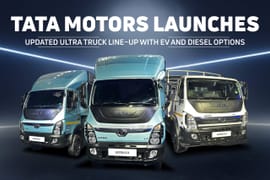 Tata Motors Launches Updated Ultra Truck Line-up with EV and Diesel OptionsThe Ultra name has always lived in a slightly different space. Not flashy like heavy trucks, not barebones either. It’s the range that quietly handles city runs, hub-to-hub movement, and the middle ground between last-mile and long haul.With today’s...4 min readPV
By Pratham
Tue Jan 20 2026
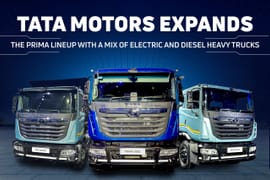 Tata Motors Expands the Prima Lineup With a Mix of Electric and Diesel Heavy TrucksTata Motors has launched new trucks in their existing Prima lineup. With the latest additions to the Prima range, Tata Motors has made it clear that it isn’t betting on a single path for heavy trucking. Instead, the company has widened the Prima port...3 min readPV
By Pratham
Tue Jan 20 2026
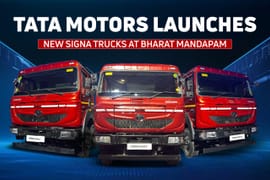 Tata Motors Launches New Signa Trucks at Bharat Mandapam Truck launches are usually loud affairs, big claims, bigger screens and a lot of words that don’t mean much once you leave the hall. Today’s Signa launch at Bharat Mandapam felt different and just more confident.Tata Motors introduced six new Signa m...5 min readPV
By Pratham
Tue Jan 20 2026
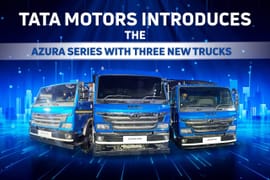 Tata Motors Introduces the Azura Series With Three New TrucksWith the introduction of the Azura series, Tata Motors has quietly reshaped its approach to the light and intermediate truck space. Instead of trying to stretch one product across multiple payload classes, the company has rolled out three separate mo...3 min readPV
By Pratham
Tue Jan 20 2026