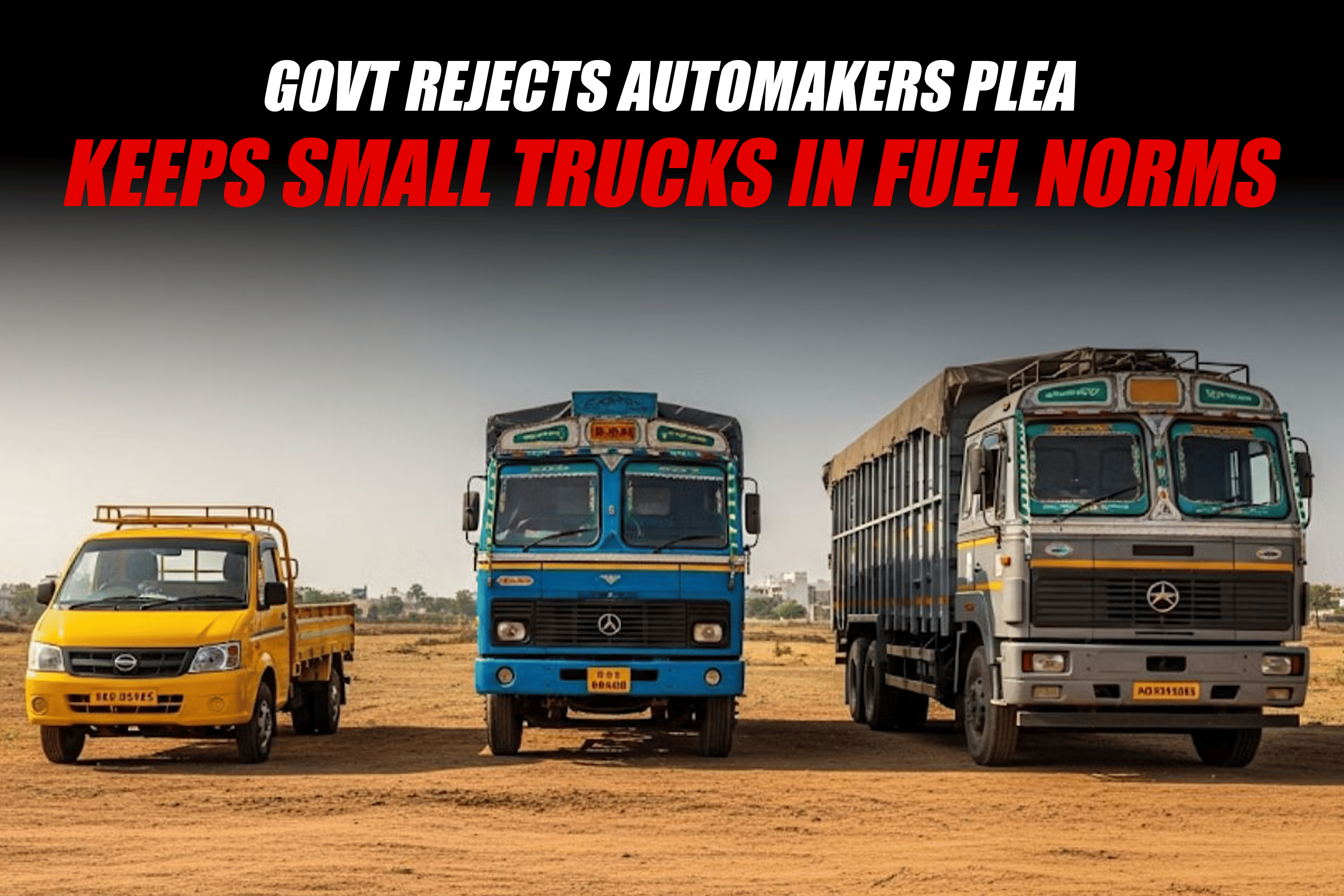
The Indian government has rejected automakers push to exclude small trucks from new fuel efficiency rules. In its latest draft, the Bureau of Energy Efficiency (BEE) said light commercial vehicles (LCVs), including mini trucks, will fall under mandatory fuel standards.
The move ends months of lobbying by companies like Mahindra & Mahindra (M&M) and Tata Motors, who argued LCVs, especially under 3.5 tonnes, serve low-income users and should be exempt to avoid cost hikes. Despite these concerns, BEE included N1 category trucks, light vehicles under 3,500 kg gross vehicle weight, citing climate and cost-saving benefits.
“Passenger cars (M1 Category) are regulated under CAFE standards, but LCVs remain unregulated. Regulating LCVs will aid decarbonization and reduce fuel costs for small businesses,” BEE said.
In the financial year 2025, LCV sales in India stood at 582,852 units, down 2% from the previous year. Yet their impact on pollution remains significant. Though freight vehicles make up only 3% of total road traffic, they contribute to around one-third of road transport emissions.
BEE's draft rule proposes that for N1 category trucks, the average fleet emissions should not exceed 115 grams of CO₂ per kilometre under the Modified Indian Driving Cycle (MIDC) test. The limit may change after industry feedback. However, it applies to fleet averages, not individual vehicles.

BEE said it consulted automakers, testing agencies like ARAI, and ministries such as MoRTH before drafting the rules. Despite this, the auto lobby, particularly the Society of Indian Automobile Manufacturers (Siam), has expressed concern. It is now preparing a new submission seeking flexibility for LCVs and small cars. Industry has 30 days to comment.
“The agency has come out with the proposal fast… it appears the final draft will have regulations on the LCV category despite opposition from automakers,” said a source aware of the process.
While the rules aim to cut tailpipe emissions, experts caution that fuel efficiency norms alone won't solve pollution. “The condition of roads, vehicles, and traffic affects emissions. Trucks emit more in traffic jams than on highways,” said Gurudas Nulkar, professor at the Gokhale Institute of Politics and Economics.
Nulkar also said commercial vehicles are often poorly maintained. “Vehicles run on the streets, not in labs,” he added.
This draft follows India’s push for cleaner commercial vehicles, including a recent scheme to subsidize electric trucks under the ₹10,900 crore PM E-drive scheme, with ₹500 crore allocated for zero-emission trucks.
Once the feedback window closes, BEE will forward its final proposal to MoRTH. If cleared, the new fuel efficiency rules will take effect by April 2027, covering light, medium, and heavy commercial trucks.
- Stay updated with 91trucks for more articles and news.
- Subscribe to our YouTube channel.
- Follow us on Facebook, Instagram, and LinkedIn.
Web Stories
Latest Trucks News
 Tata Ace Turns 21; Tata Motors Launches Ace Gold+ XL for Last-Mile LogisticsTata Motors has marked 21 years of its small commercial vehicle, the Tata Ace, with the launch of the new Ace Gold+ XL. The model arrives as an extension of the existing Ace range, aimed at improving load capacity and efficiency in last-mile transpor...3 min readIG
By Indraroop
Wed May 06 2026
 Ashok Leyland Launches Twin Fuel DOST and DOST+ XL in IndiaAshok Leyland has launched two new Light Commercial Vehicles (LCV)- the Twin Fuel DOST and DOST+ XL- which have produced a practical and environmentally-friendly way of last-mile delivery. The launch took place on April 16, 2026, in New Delhi, as par...3 min readIG
By Indraroop
Thu Apr 16 2026
 Mahindra Trucks and Buses Accelerates Growth, Logs 40% Sales Rise in JanuaryIn January, Mahindra and Mahindra’s Trucks & Buses Division showed a 40% increase in sales over the previous year, selling a cumulative total of 3,065 commercial vehicles. This is a positive sign for the commercial vehicle market in India, which...4 min readIG
By Indraroop
Wed Feb 04 2026
 Budget 2026–27 Could Deliver Major Boost to Trucks, Commercial VehiclesThe Union Budget for 2026-27 India focuses on infrastructure development, which is expected to generate long-term momentum for the trucks and commercial vehicles sector. The increase in public sector capex indicates the government's focus on improvin...4 min readIG
By Indraroop
Mon Feb 02 2026
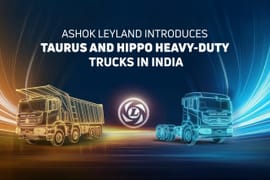 Ashok Leyland Introduces Taurus and Hippo Heavy-Duty Trucks in IndiaAfter more than half a century of silence, two of the most recognizable names in India’s heavy trucking story are coming back. Ashok Leyland is set to launch the Taurus and Hippo trucks, not as nostalgic throwbacks, but as fully re-engineered, modern...3 min readPV
By Pratham
Thu Jan 22 2026
 Mahindra Unveils New Bolero Camper and Pik-Up Range with Fresh Design, Features and Comfort FeaturesBeing a prominent manufacturer of commercial vehicles in the Indian automotive industry, Mahindra & Mahindra Ltd. has introduced new variants of both the Bolero Camper model and the Bolero Pik-Up model of the Bolero series of utility vehicles, wh...3 min readIG
By Indraroop
Thu Jan 22 2026
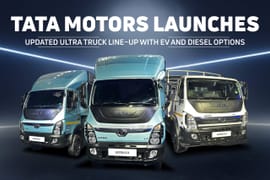 Tata Motors Launches Updated Ultra Truck Line-up with EV and Diesel OptionsThe Ultra name has always lived in a slightly different space. Not flashy like heavy trucks, not barebones either. It’s the range that quietly handles city runs, hub-to-hub movement, and the middle ground between last-mile and long haul.With today’s...4 min readPV
By Pratham
Tue Jan 20 2026
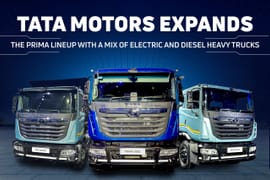 Tata Motors Expands the Prima Lineup With a Mix of Electric and Diesel Heavy TrucksTata Motors has launched new trucks in their existing Prima lineup. With the latest additions to the Prima range, Tata Motors has made it clear that it isn’t betting on a single path for heavy trucking. Instead, the company has widened the Prima port...3 min readPV
By Pratham
Tue Jan 20 2026
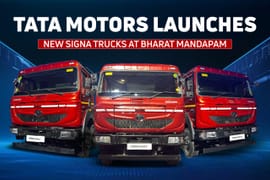 Tata Motors Launches New Signa Trucks at Bharat Mandapam Truck launches are usually loud affairs, big claims, bigger screens and a lot of words that don’t mean much once you leave the hall. Today’s Signa launch at Bharat Mandapam felt different and just more confident.Tata Motors introduced six new Signa m...5 min readPV
By Pratham
Tue Jan 20 2026
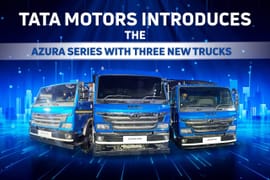 Tata Motors Introduces the Azura Series With Three New TrucksWith the introduction of the Azura series, Tata Motors has quietly reshaped its approach to the light and intermediate truck space. Instead of trying to stretch one product across multiple payload classes, the company has rolled out three separate mo...3 min readPV
By Pratham
Tue Jan 20 2026