Tata 9 Seater Buses in India
Tata 9 Seater buses are designed with a simple concept, transport passengers efficiently, but do it without making it look like a strain. The seating capacity, therefore, does not simply refer to the number of persons a bus can carry, but also affects its performance on the road, as well as the comfort of passengers as they get settled, especially with the back-and-forth movement of the vehicle.
There is a definite change as the configurations change. The smaller seating arrangements seem to be more accommodating, almost more easy to utilize in the more confined city environment. Of course, increasing the seating capacity changes the character of the vehicle, not drastically, but enough nonetheless. The emphasis is placed more on the amount of passengers that can be carried per trip, improving the economics of the route while still maintaining a reasonable comfort level. Tata, for the most part, maintains this transition within controlled parameters. The design does not appear to be stretched or forced.
Durability is evident in every aspect of the line. The vehicles are expected to work long hours under varying loads at times, often in less-than-ideal road conditions. And they do, without calling too much attention to themselves. Fuel efficiency, reliability and overall strength combine to promote a sense of continuity. Not perfect, perhaps, but reliable nonetheless.
Price List of Tata 9 Seater Buses in India
| Model | Price |
|---|---|
| Winger Staff | ₹14,35,000 |
| Winger Ambulance | ₹22,52,000 |
| Winger Tourist Staff 15 S | ₹15,35,860 |
| Magic Express School | ₹7,34,416 |
| Last Updated: Oct 13, 2026 | |
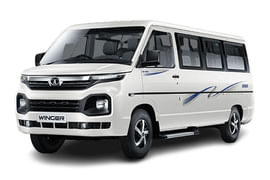


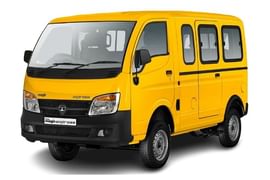
Most Popular Comparison
About Tata 9 Seater Bus Models Price in India
In this section, a few Tata bus models have gained a steady market. Winger Staff usually dominates the conversation. Other models in the lineup come close behind. It’s seldom one specific feature that makes these models popular. More often than not, it’s the combination and how well they can operate within cost constraints that makes these models successful in the market.
Tata 9 Seater Bus Price in India
The price range for Tata 9 Seater buses varies between ₹7,34,416 and ₹22,52,000. What determines this range is not always clear at first glance. While the seating arrangement is certainly a determining factor, so too are chassis configurations and other minor customizations that tend to come into play.
A staff transport vehicle may differ in configuration from one designed for stage carriage. The seating arrangements, entry points, spacing – all these factors vary. And so does the price. It’s not so much the range; it’s how well the vehicle meets the needs it was designed to meet.
Key Features of Tata 9 Seater Buses in India
-
Seating layouts planned to optimise capacity without creating a cramped feel
-
Sturdy chassis and suspension setup that absorbs varied road conditions reasonably well
-
Fuel efficiency that holds steady, even as passenger load increases
-
Driver area designed for long hours, with controls that feel practical rather than complex
Applications of Tata 9 Seater Buses in India
-
City passenger transport, where lower seating configurations help with frequent stops and smoother movement through traffic
-
Intercity and long-distance routes, where higher seating capacity improves trip efficiency and passenger volume handling
-
Staff and employee transportation for corporate or industrial use, often requiring consistent daily movement
-
School and institutional transport, where seating layout and safety considerations play a key role
-
Contract carriage and shuttle services, adaptable to varying passenger demand without major configuration changes
Mileage and Performance of Tata 9 Seater Bus in India
Mileage, as expected, depends on the seating capacity and usage. Still, Tata buses tend to operate at optimal levels in terms of fuel efficiency under both light and heavy loads. The performance of the engine does not strive to achieve any extremes; rather, it aims to deliver performance in terms of output, power and torque that is easily manageable.
It’s these small things that one doesn’t appreciate at first, but in the end, they become one of the more important features.
Why Choose Tata 9 Seater Buses in India?
-
A service network that supports operations without excessive downtime
-
Resale value that tends to remain steady in the used vehicle market
-
Maintenance requirements that stay within predictable limits
-
Configurations that allow gradual scaling as demand increases
-
Brand familiarity, which, in this segment, often influences long-term decisions
Compare Tata 9 Seater Models at 91trucks
Buyers of Tata 9 Seater capacity buses will have a chance to compare different models of the same brand depending on their prices, seating capacity, mileage, engines and other features. The range of options will vary between ₹7,34,416 and ₹22,52,000, thus sufficient for different purposes.
Comparing the two will bring more clarity. Not everything can be compared, as sometimes small changes make a big difference.