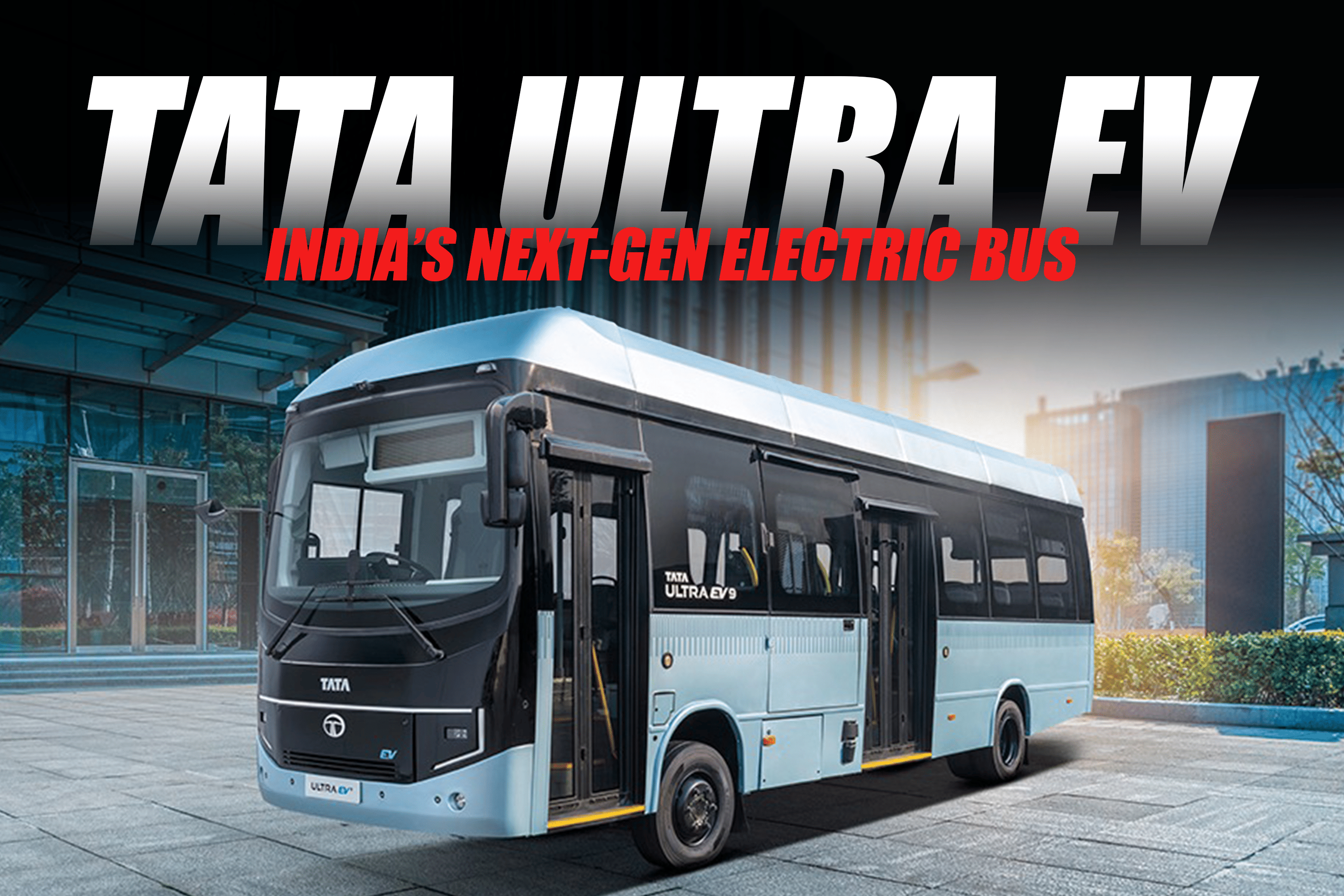
India is on the move, its cities beat faster than anyone. Day after day, millions depend on public transport to live, work, and commute, but the fuel powering this motion has a price tag, pollution, noise, and increasing operating costs. Tata Motors, a mobility brand people trust, now responds with a cleaner alternative: the Tata Ultra EV. This electric bus is not a product, it's a change, a targeted response to urban India's increasing demand for eco-friendly commercial transportation.
A Purpose-Built Electric Bus
The Tata Ultra Electric Bus is powered by a completely electric driveline. It is built from scratch, with no diesel used, it emits no tailpipe pollution, it runs quietly, producing fewer sounds and vibrations. In short, it reimagines how cities feel and breathe.
Based on Tata's Ultra platform, this bus has an easy time maneuvering city streets with a modular layout. It means various lengths, capacities, and battery configurations can be plugged in, without sacrificing structure or balance.
What Makes the Ultra EV Practical
1. Designed for Cities
The Ultra EV incorporates a low-floor boarding, riders can quickly board and alight. The gangway is spacious, and travel within the bus remains smooth. For mobility-impaired travelers and seniors, this is significant.
2. Clean, Quick Performance
The vehicle is driven by an electric motor, it provides torque at zero RPM, no revving, no delay and plain acceleration. On busy streets, the bus navigates with confidence, even being loaded, it does not labor.
3. Real-Time Control
Operators can track this vehicle in real-time. The onboard telematics system checks diagnostics, monitors energy use, and supports route optimization, which reduces downtime and fleet owners save time and money.
Technical Specifications
The Ultra EV is not a concept, it’s a well-tested product with precise technical benchmarks.
| Specification | Details |
| Length | 9–12 meters |
| Seating Capacity | 30–34+D passengers |
| Battery Pack | 200 kWh (Lithium-ion) |
| Range per Charge | 150–250 km |
| Motor Output | Approx. 215 kW |
| Top Speed | 75 km/h (limited for safety) |
| Charging Time | 1.5–3 hours (fast charging supported) |
| Brakes | Front disc and Rear Drum |
| Suspension | Air suspension system |
| Platform | Tata Ultra modular chassis |
| Digital Systems | Telematics, ITS integration, diagnostics |
With this structure, Tata delivers performance without emissions. Operators get flexibility, passengers get comfort, and cities gain cleaner air.

Is the Price Worth It?
Let's discuss the price of electric buses. Yes, the initial cost is more compared to diesel buses, but look at the cost of ownership.
The Ultra EV is fuel-efficient, electricity is less expensive than diesel, it is also less costly to maintain. There are fewer moving parts, hence fewer failures. With incentives from the government (such as FAME II) and state-level subsidies, the investment is more feasible.
After a couple of years, the gap reduces, but in most instances, it flips and the electric commercial vehicle starts making money.
Where It's Already Working
The Ultra EV has already been integrated in city fleets. Municipalities such as Mumbai, Lucknow, Delhi, and Bengaluru deploy Tata's electric buses on a daily basis. Smooth performance is reported by operators and commuters prefer the silent ride. Drivers have less fatigue, no gear changes, no vibration.
It's not a pilot project, it's already transforming the way Indian cities go about things.
Tata's Strategy: Build the Ecosystem
Tata does not stop at the vehicle, the company constructs infrastructure as well, charging stations, fleet management software, maintenance support. The aim is not adoption alone, it's continuity.
They certify operators and provide full service support. They even collaborate with smart city projects to incorporate electric buses within long-term city plans.
This makes the Tata commercial vehicle strategy distinct. It's not product-led it's solution-led.
Why Tata Ultra EV Matters Now
Here's why this launch happens now:
- Cities are strangling. Pollution is increased by diesel buses. EVs cut it back.
- Fuel prices are unpredictable. Electricity is a stable cost.
- Rules favor EVs. Mandates and subsidies are on the rise.
- The hope in the air is changing. Greener is what people desire.
The Ultra EV is the epicenter of that shift, it's not an idea for the future, it's available today.
Conclusion
The Tata Ultra EV represents more than engineering, it shows where Indian mobility is heading. Built for real-world roads, backed by smart systems, and supported by a full EV ecosystem, this electric bus checks every box.
It’s clean, it’s reliable, and it’s cost-effective.
And for cities hoping to build a sustainable transport future, it’s exactly what’s needed.
For more articles and news, stay updated with 91trucks. Subscribe to our YouTube channel and follow us on Facebook, Instagram, and LinkedIn for the latest videos and updates from the automotive world!
Read More:
Web Stories
Latest Buses News
 Tata Motors Bags Orders for More Than 5,000 Buses from State Transport UndertakingsTata Motors has received an order from several state transport undertakings (STUs) across India to deliver more than 5,000 buses and/or bus chassis. The order includes transport corporations located in the states of Maharashtra, Gujarat, North Wester...3 min readIG
By Indraroop
Mon Mar 16 2026
 GreenCell Mobility Plans Deployment of 570 Electric Buses to Expand Delhi’s Public Transport NetworkDelhi has been expanding its clean mobility space as 570 electric buses are being readied to be deployed across Delhi in the next few months by GreenCell Mobility. This move complements Delhi’s efforts in enhancing its zero-emission public transporta...4 min readIG
By Indraroop
Mon Feb 09 2026
 Zingbus Expands EV Push with 50 Electric Buses Planned for 2026, Eyes 1,000 by 2030Zingbus, the India-based intercity travel platform, has announced a strategic expansion of its electric bus rollout, planning to deploy 50 new electric buses in 2026 as part of a broader mobilisation towards cleaner, long-distance travel. This initia...4 min readIG
By Indraroop
Fri Feb 06 2026
 Ashok Leyland Signs MoU with PT Pindad for Electric Bus and Defence Vehicle ProjectsIndian bus and commercial vehicle manufacturer Ashok Leyland has signed a strategic Memorandum of Understanding (MoU) with Indonesian state-owned defence and industrial company PT Pindad to jointly work on the development of electric buses and defenc...3 min readIG
By Indraroop
Thu Feb 05 2026
 Mahindra Trucks and Buses Accelerates Growth, Logs 40% Sales Rise in JanuaryIn January, Mahindra and Mahindra’s Trucks & Buses Division showed a 40% increase in sales over the previous year, selling a cumulative total of 3,065 commercial vehicles. This is a positive sign for the commercial vehicle market in India, which...4 min readIG
By Indraroop
Wed Feb 04 2026
 Telangana Invites Lady Drivers to Take Command of Public Buses Marking a Significant Milestone Telangana has deliberately included women in the mainstream of their transportation services workforce by calling for expressions of interest from women to join as bus drivers for the first time as part of this systemic government-level initiative. T...4 min readIG
By Indraroop
Tue Dec 23 2025
 From Tata Winger to Force Urbania and More: Top-4 Tempo Travellers for Family Roadtrips This WinterSUVs and MPVs are hot favourites among Indian families. But when it comes to taking the extended families on long road trips this 2025 winter, a tempo traveller can provide all the comforts that no passenger vehicle can claim to offer. So move over I...4 min readPV
By Pratham
Fri Dec 19 2025
 Zingbus Grows Electric Bus Fleet via New Operator Partnership ModelIntercity smart mobility technology platform Zingbus has scaled up its EV initiative by aggregating fleets through partnerships with bus operators rather than owning and operating the fleet all by themselves. It has moved away from a Company-Owned, C...3 min readIG
By Indraroop
Tue Dec 02 2025
 IntrCity Rolls Out Advanced Air-Purified Intercity Bus Fleet Across North IndiaIntrCity SmartBus has deployed a new fleet of air-purified coaches on key intercity corridors in North India, amid growing concern about air quality during long-distance travel. The rollout introduces SmartBus.AQI, a service built around continuous i...4 min readIG
By Indraroop
Mon Nov 24 2025
 Is It Time to Retire Sleeper Buses?Sleeper buses used to feel like a reasonable option for long-distance travel, comfortable, inexpensive and quick. But two recent tragedies and the growing evidence of system failures, raises a bigger question: Should we say farewell to sleeper buses?...7 min readJS
By Jyoti
Tue Nov 18 2025