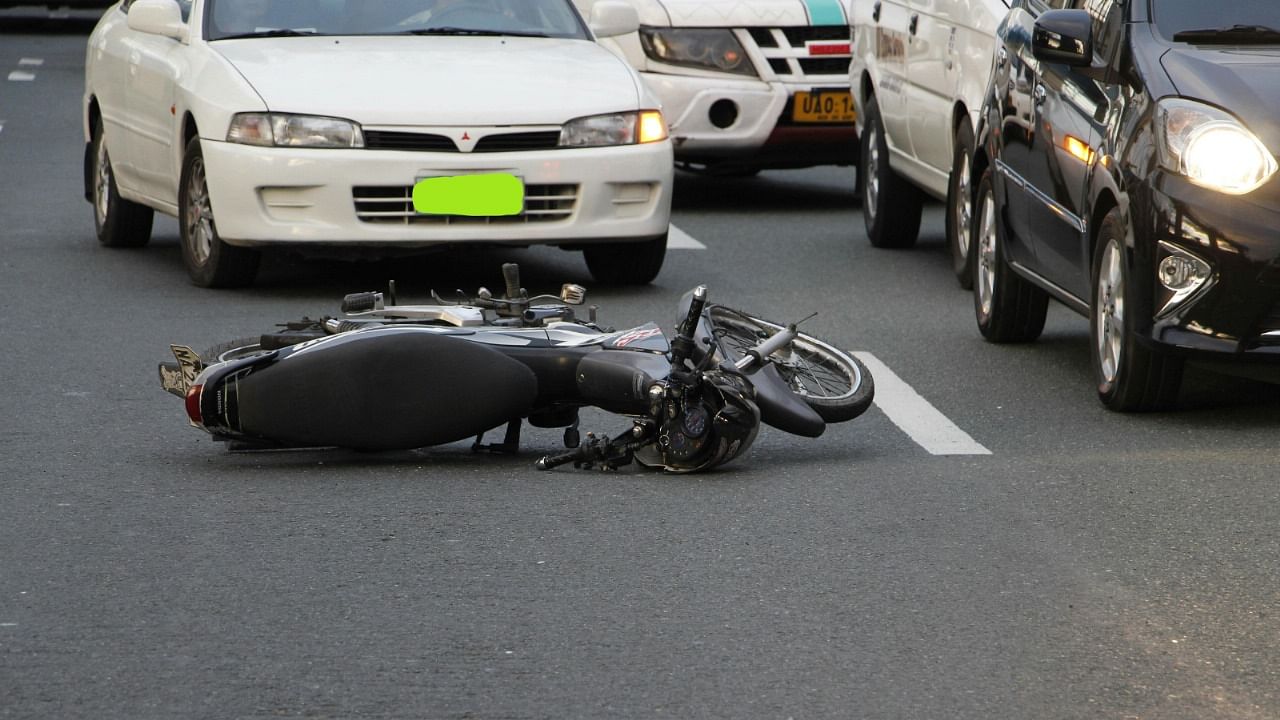
Often, the larger vehicle bears the majority of the blame when accidents occur on the road. When a car strikes a pedestrian, a truck collides with a smaller vehicle, or a car collides with a cycle cart, people often hold the driver of the larger vehicle responsible. This disparity in fault allocation raises questions about legal standards, road safety policies, and societal perceptions. Let’s delve deeper into why this happens, using a recent example involving a Honda City and a cycle cart and insights from legal and safety experts.
Legal Principles in Fault Determination
- Duty of Care: The law often places a higher "duty of care" on larger vehicles. A truck, for instance, can cause more significant damage than a sedan, and a sedan can do more harm than a bicycle. Courts and authorities expect drivers of bigger vehicles to exercise greater caution because of their potential to cause catastrophic harm. This principle can sometimes lead to the presumption of fault against the larger vehicle.
- Contributory Negligence and Assumptions of Responsibility: In many jurisdictions, contributory negligence comes into play during accident investigations. People generally assume that larger vehicles have better visibility, more robust braking systems, and experienced drivers. When an accident occurs, there’s an expectation that these factors could have helped prevent it, even if the smaller party was primarily at fault.
- Challenges in Proving Fault: Determining fault often relies on evidence like eyewitness accounts, damage patterns, and road conditions. Often, people interpret the damage location of the larger vehicle as "aggressive," while they interpret minor damages to smaller vehicles as "defensive."
The Honda City vs. Cart Incident
A recent incident illustrates these principles in action. Despite the clearly posted "No carts allowed" signs in Connaught Place (CP), a cycle cart violated traffic rules by entering the area. A Honda City collided with the cart, resulting in extensive damage to both the car and the cart. The cart driver was hospitalized, and the car driver was arrested, requiring bail for release.
Key Observations:
- The cart driver violated traffic laws by not only entering a prohibited area but also by driving against the flow of traffic: These are clear violations of traffic laws, which should have placed at least partial fault on the cart driver.
- Legal Action Against the Car Driver: Despite the cart driver's actions, the Honda City driver was arrested and held responsible. This underscores the systemic bias against larger vehicles, as the cart passengers fled the scene, leaving the car driver as the only available party for legal scrutiny.
- Lack of Accountability for Smaller Vehicles: The absence of a case against the cart driver highlights the enforcement gaps in ensuring accountability across all vehicle types.
Perspectives from Truck and Car Accident Cases

Even when smaller vehicles cause the collision, drivers of larger vehicles like trucks frequently take the blame for the accident. This bias is due to:
- Severity of Damages: Larger vehicles inherently cause more damage, leading to assumptions that they were the aggressors.
- Public Sympathy: Pedestrians, cyclists, and smaller vehicles often receive greater public sympathy as “vulnerable road users.”
Truck drivers often face lawsuits due to the perception that they can prevent most accidents by driving defensively, regardless of the other party's actions.
The Broader Implications: Does the System Encourage Hit-and-Run Behavior?
This case also highlights a troubling loophole in road safety enforcement. Drivers may feel tempted to avoid accountability altogether when both fleeing the scene and staying to take responsibility result in similar outcomes. We can restore faith in the legal system by strengthening laws that ensure equitable fault distribution and thorough investigation of all parties involved.
Conclusion: Balancing Accountability and Fairness
Accidents are complex events with multiple factors at play. While it is essential for larger vehicle drivers to exercise caution, a blanket presumption of fault can lead to unfair legal and social outcomes. Revisiting traffic enforcement policies to hold all road users accountable, irrespective of their vehicle size, is crucial. In the Honda City case, stricter action against the cart driver and passengers might have sent a clearer message about shared responsibility on the roads.
Web Stories
Latest Industry Insights News
 EKA Mobility Records Over 13X Growth in H1 FY27 Volumes, Crosses 1,700 UnitsEKA Mobility recorded a significant rise in vehicle volumes during the first half of FY2026-27, with sales increasing to 1,786 units from 133 units in the corresponding period last year. The company reported a 1,243% year-on-year growth, taking its H...4 min readST
By Saksham
Thu Oct 01 2026
 Protecting Revenue When Commercial Vehicles Are the Backbone of Your BusinessFor many businesses in India, the truck or van parked outside is where the money comes from. When it runs, goods move, deliveries happen, and cash comes in. When it stops, everything slows down. Most owners think carefully about buying the right vehi...9 min readST
By Saksham
Tue Sep 29 2026
 Ganpati Bappa Morya, Time to Bring Home a New IntraGanesh Chaturthi is here, and with it comes a familiar feeling, homes decorated, drums playing in the streets, and Bappa arriving to bless every new beginning. It's the season people pick to start something new, and for a lot of business owners, that...3 min readST
By Saksham
Fri Sep 11 2026
 Mr. India Was Never InvisibleWhat if Mr. India was never fictional? What if the man who could disappear wasn't a superhero at all, but a father somewhere on a highway, hundreds of kilometres away from home?Meet Pari.On Independence Day, a little girl stood on a stage to particip...4 min readST
By Saksham
Mon Aug 17 2026
 Amazon Partners With Eicher Trucks for EV Delivery Expansion in IndiaAmazon India is expanding its fast delivery service through Amazon Now by adding 1000 electric trucks as part of their logistics network. These trucks will be supplied by VE Commercial Vehicles and its subsidiary Eicher Trucks & Buses and will be...4 min readIG
By Indraroop
Thu May 21 2026
 Tata Ace Turns 21; Tata Motors Launches Ace Gold+ XL for Last-Mile LogisticsTata Motors has marked 21 years of its small commercial vehicle, the Tata Ace, with the launch of the new Ace Gold+ XL. The model arrives as an extension of the existing Ace range, aimed at improving load capacity and efficiency in last-mile transpor...3 min readIG
By Indraroop
Wed May 06 2026
 Ashok Leyland Launches Twin Fuel DOST and DOST+ XL in IndiaAshok Leyland has launched two new Light Commercial Vehicles (LCV)- the Twin Fuel DOST and DOST+ XL- which have produced a practical and environmentally-friendly way of last-mile delivery. The launch took place on April 16, 2026, in New Delhi, as par...3 min readIG
By Indraroop
Thu Apr 16 2026
 Tata Motors Lucknow Plant Crosses 10 Lakh Commercial Vehicles MilestoneThe Tata Motors Ltd.'s manufacturing plant located in Lucknow has produced a total of 10th lakh commercial vehicles over the last thirty years and recently celebrated this achievement with a ceremony that was attended by representatives from the Gove...4 min readIG
By Indraroop
Wed Apr 15 2026
 Bajaj Launches WEGO Electric 3-Wheeler Range with Up to 296 km RangeBajaj Auto has released a brand new range of electric three-wheelers called WEGO. According to Bajaj, the company has one of the largest selections of EV three-wheelers in India, with varieties catering to both passenger and freight uses. Five separa...3 min readIG
By Indraroop
Tue Apr 14 2026
 Tata Motors Bags Orders for More Than 5,000 Buses from State Transport UndertakingsTata Motors has received an order from several state transport undertakings (STUs) across India to deliver more than 5,000 buses and/or bus chassis. The order includes transport corporations located in the states of Maharashtra, Gujarat, North Wester...3 min readIG
By Indraroop
Mon Mar 16 2026